
'The White House lunch that Trump hosted for Munir last year came just after Munir returned from a visit to Iran, at a moment when Israel and Iran were at war.' 'Trump said after that lunch that the Pakistanis know Iran very well. He likely views Munir as a useful interlocutor that can give helpful insights on Iran.'

Egypt, Pakistan, Saudi Arabia and Turkey met in Islamabad in what analysts say is the formal opening of a new diplomatic formation that could reshape the post-war regional order. Their immediate goal is a ceasefire; their larger ambition is to ensure that neither Iran nor Israel emerges from this war in a dominant position. Pakistan's foreign minister then flew directly to Beijing and mooted a Chinese role as guarantor of any eventual agreement. Prem Panicker continues his must read daily blog on the Gulf War.

The US has granted India permission to buy Russian oil already in transit to ease global supply pressures amidst the West Asia conflict. This decision comes after India agreed to halt sanctioned Russian oil purchases and substitute them with US oil.

'Every year we import approximately $70 billion worth of gold -- closer to $72 billion in 2025-2026, an all-time record.' 'There is no parallel for this anywhere in the world. And this love for gold will not disappear overnight.'

'The next two to three weeks will not be decided in Washington.' 'They will be decided in Tehran, in whatever calculation Iran makes about the costs of continued resistance against the costs of appearing to have yielded.'

It may now be time to question the price India is paying for Israel's disregard of the serious undermining of India's energy security, asserts former foreign secretary Shyam Saran.

Indian refiners are negotiating for additional crude cargoes from the US, Russia, and West Africa to ensure adequate supplies amid Middle East tensions. Refineries are maintaining normal processing rates and deferring maintenance to build reserves. The move comes as conflict impacts tanker movements through the Strait of Hormuz, a key energy transit route.

Sanctioning Russian oil would have led to a sharp surge in oil prices to above $80 per barrel levels, which would impact pump prices in the US ahead of midterm elections next year.

India has said it will take all steps to protect its national interests and ensure comprehensive national security in all domains after Pakistan and Saudi Arabia signed a strategic defence pact.

'Was the five-day pause ever meant to hold, or was it simply another instrument of signaling, of positioning, of buying time in a war where even the pauses are tactical?' asks Prem Panicker in his must read daily blog on the Gulf War.

'Our diplomacy should have been focused on preventing war and avoiding the inevitable disruptions it would cause, posing a real risk to India's growth story,' asserts former foreign secretary Shyam Saran.

The United States has encouraged India to purchase Russian oil already at sea to mitigate supply shortages and price increases amid the West Asia conflict, according to Energy Secretary Chris Wright. This move is described as a short-term effort to stabilise the market without altering Washington's policy towards Russia.

Indian companies, however, are now paying a premium of $6-$7 a barrel for Russian oil, compared with discounts of $8-$10 a barrel before the start of the conflict.

The United States, which entered this war in expectation of a short, sharp win along the Venezuela model, is now preparing for deeper involvement in a conflict it does not fully control, without the allies it typically relies on, against an adversary that is not behaving as expected, in a global environment that is already absorbing economic shock. Prem Panicker continues his must read daily blog on the Gulf War.

It is learnt that India was mulling various options relating to the project after Trump administration threatened a 25 per cent additional tariff on countries doing business with Tehran.

Fight on toward goals that keep receding, or exit with most objectives unmet. Trump is agitated, his poll numbers falling below the Plimsoll line, his base fractured between those who back the war and those who remember that he campaigned on ending them.

When missiles fly in this region, they are never just aimed at military targets.
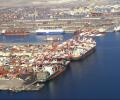
President Trump, in a move that could have implications on India's energy security, on Monday decided not to grant sanctions exemptions to any oil customers of Iran, further squeezing Tehran's top export commodity.

Alliances fight wars effectively only when they share an endgame. If Israel acted without US knowledge, then the military alliance is operating without real coordination at the level of strategic targeting. Neither picture is reassuring in a war that is no longer regional in its consequences. Prem Panicker continues his must read daily blog on the Gulf War.

The LPG squeeze on India's restaurant sector is the quotidian face of a deeper crisis.

The United States says its expects India to enforce United Nations sanctions against Iran but left it to that country to decide on steps to "convince" the Persian Gulf state to abandon its pursuit of nuclear weapons.
India is evaluating its involvement in the Chabahar port project in Iran due to potential US tariffs. The US had granted India a waiver for the project, but it expires soon. India is exploring options to continue supporting the port's development while minimizing exposure to US sanctions.
Is likely to give another six-month reprieve from financial sanctions to India, South Korea, Turkey and others.

The threat of wars hovers over the negotiations in Oman, but the good part is that Trump called the talks to be 'very good' and Iran's President Masoud Pezeshkian responded that they 'constitute a step forward', points out Ambassador M K Bhadrakumar.

The US has temporarily permitted India to accept Russian oil already on ships to ensure energy supplies amid the conflict with Iran. This short-term measure is not expected to significantly benefit Russia financially.
The resolution, which is expected to be introduced shortly, may be voted late this week or early next week.

An obscure Indian bank has been an unlikely beneficiary of Western sanctions against Iran, handling billions of dollars from frozen oil payments that boosted its interest margins, but is now having to prepare itself for life after the windfall.

"The world might face a food crisis if the war continued till the end of April, as it could have a dramatic impact on planting in Europe and North America," said Matt Simpson, CEO of Brazil Potash.

Dubai's core promise -- that it is an oasis untouched by regional storms -- has been tested in full public view. The coming months will show whether investors view the attacks as a short-lived disruption or a deeper signal of lasting risk, points out Asif Ullah Khan.

Warning companies eyeing business deals with Iran, United States President Barack Obama has said that they can take such a move at their own peril as America and its allies would come down like a "ton of bricks" on those that violated sanctions against Tehran.
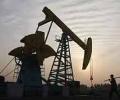
"Today I have made the determination that seven economies -- India, Malaysia, Republic of Korea, South Africa, Sri Lanka, Turkey and Taiwan--have all significantly reduced their volume of crude oil purchases from Iran," Secretary of State Hillary Clinton said in a statement.
Immediately on its return from the July 4th holiday recess, an angry Republican dominated US House of Representatives has lashed out against the Obama administration for providing India and several other nations waivers from sanctions for cutting its oil imports from Iran, and threatened to take legislative action to rebut the administration's reprieve to these nations, by passing tough new sanctions.
A United States official is set to hold talks in the United Arab Emirates, Bahrain and Lebanon this week on sanctions imposed by the United Nations Security Council on Iran over its nuclear programme.
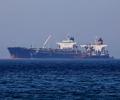
The US has sanctioned an Indian national based in the United Arab Emirates and two India-based entities for operating as part of Iran's shadow fleet and involved in shipping Iranian oil. The US Department of the Treasury said Jugwinder Singh Brar, who owns multiple shipping companies, operates as part of Iran's shadow fleet, which the US said is used to evade sanctions and transport Iranian oil. Brar also owns or controls India-based shipping company Global Tankers Private Limited and petrochemical sales company B and P Solutions Private Limited. The sanctions come as part of a US campaign of maximum pressure on Iran and target the country's petroleum and petrochemical sectors.
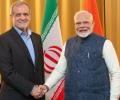
'Within minutes, my mobile began ringing. It was National Security Adviser Brajesh Mishra, asking why the Iranians were complaining.' 'I explained that we had only restated our position in the light of the conclusion reached by the IAEA, but will remain helpful to Iran to reach a consensus.' 'Then came a call from Foreign Secretary Kamal Sibal, repeating what Mishra said about the Iranian complaint.' 'I was very impressed that Iran was able to reach two top officials in India to intervene at short notice,' recalls Ambassador T P Sreenivasan.

Where are the most oil reserves in the world? Who owns them? Find out!
The sanctions bar foreign countries from exporting refined petroleum to Iran, as well as restrict access to US financial institutions for any entities that help Iran's Revolutionary Guard Corps. Also, it prevents investment, transfer of technology and development of Iran's energy sector, and makes it easier for states and localities to divest from companies that do business with Iran.
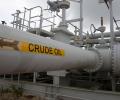
India has gained the least since Russia invaded Ukraine in February 2022 and was penalised the most, while the US, China and the European Union emerged as the biggest beneficiaries from the war.
United States Secretary of State Hillary Clinton has said that India, along with countries like China and Turkey, is taking steps to reduce its dependency on Iranian oil.
Businesses that help supply Iran with refined petroleum or help develop the country's own refining capacity would be penalised by the legislation.
